text text







text text
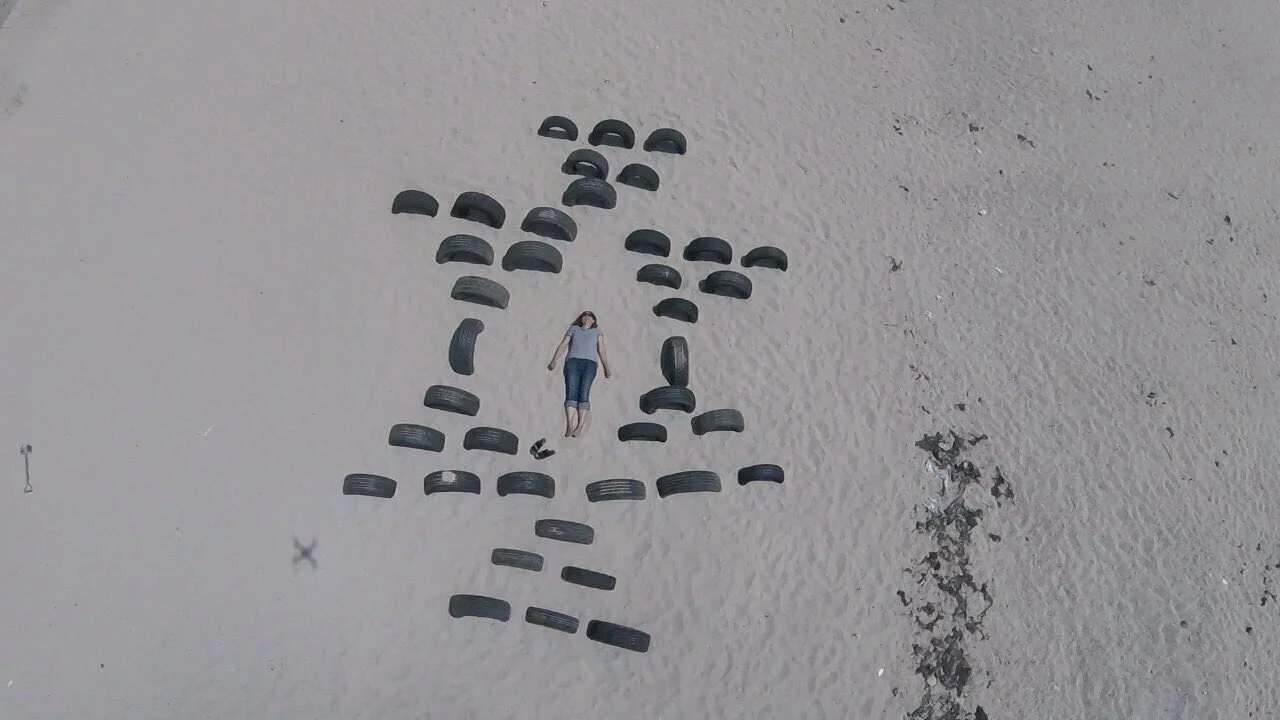
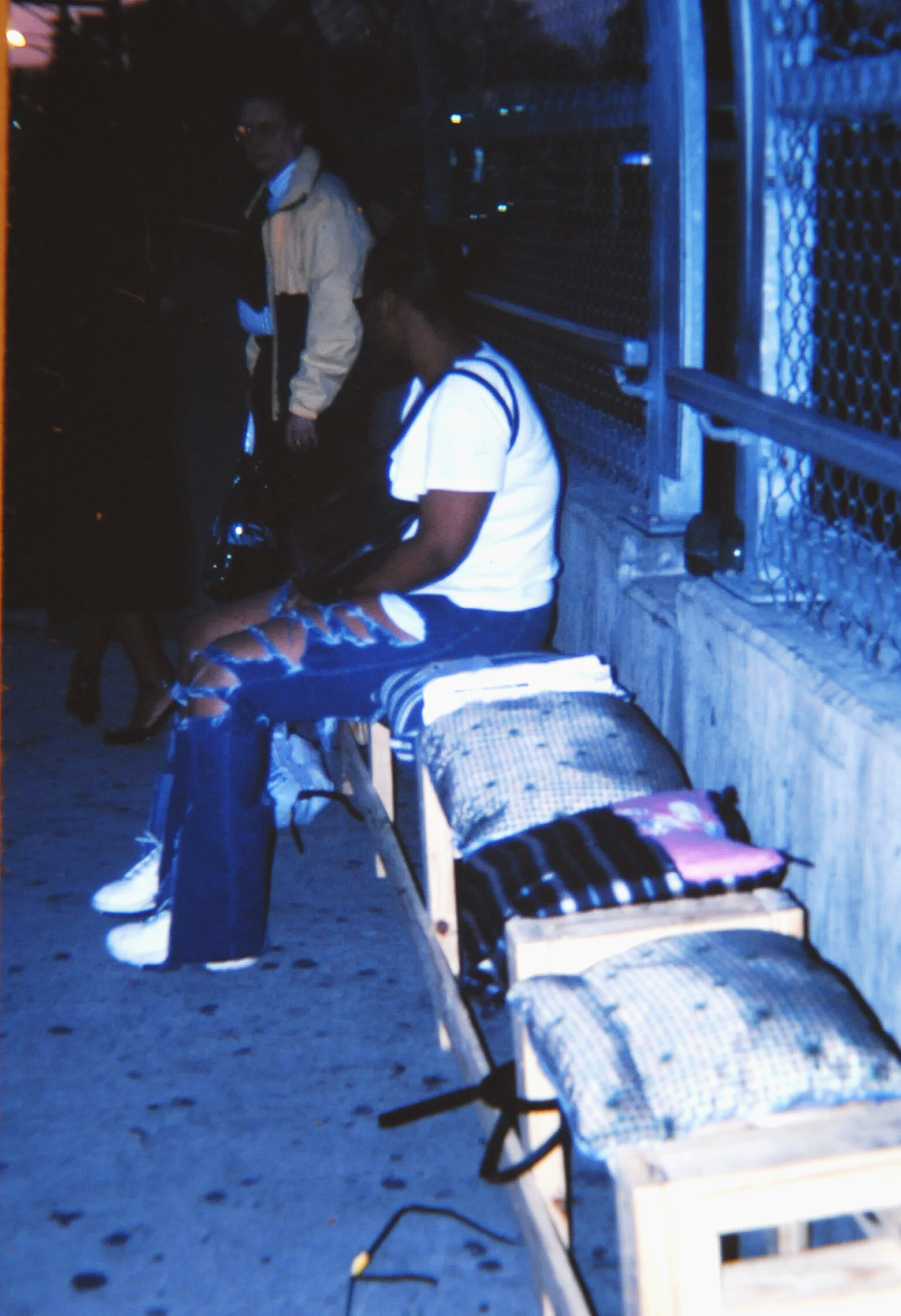
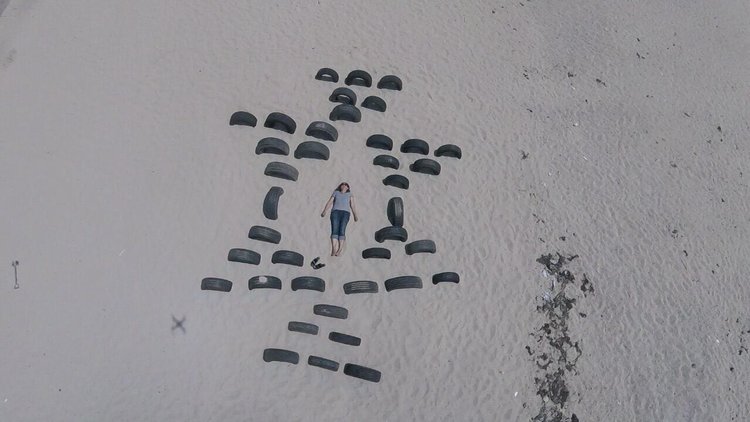
The composition of the tires is of a carpet motif that is seen as in all the lands as far north as Turkey and south as Saudi Arabia - meaning that it must have traveled with nomads.
Half-buried-car-tires-in-sand are currently used as boundaries between tents in the desert.
This modern day demarcation is ironic because tires themselves are objects of mobility, transcending borders.
Thus, the piece is a personal attempt to break through boundaries - and link up my place of origin of Turkey to where I grew up : Kuwait and Saudi Arabia - and make a statement on mobility and borders today.
The piece was made during and for the Sadu Art and Design Initiative (SADI) Program that I curated and ran for three months with the Sadu House in Kuwait (www.alsadu.org)
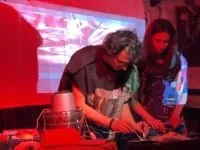
Surgical Instruments (Ceyda Oskay and Mehmet Özdere) play electronic instruments made from real historical surgical tools that belonged to Oskay's grandfather. The work is socially engaged and invites various groups of people who have had particular surgeries, to come together and improvise and "channel" their surgical experiences in a collective way.
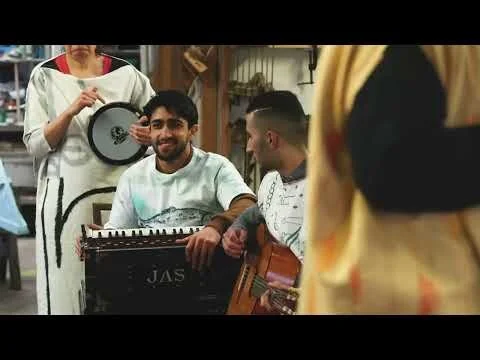
Collaborative music performance in Cork, Ireland. Improvisations on uncertainty and migration. Featured in Studio International Magazine . Socially engaged, collaborative project.
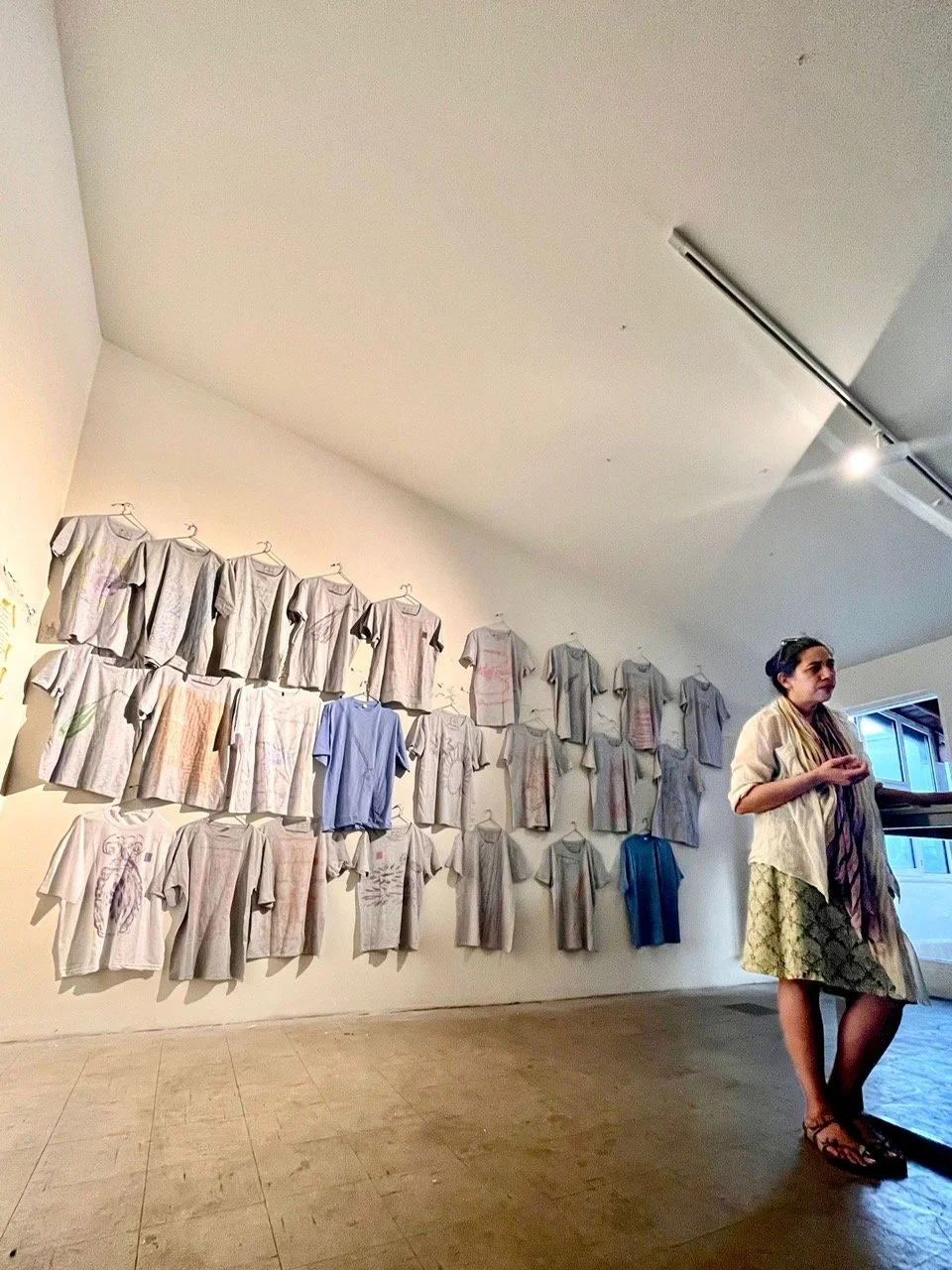
t-shirts made from frottages made at the Cemberltas historical district of Istanbul, during a residency with Pasaj, hosed at Barin Han. August 2023
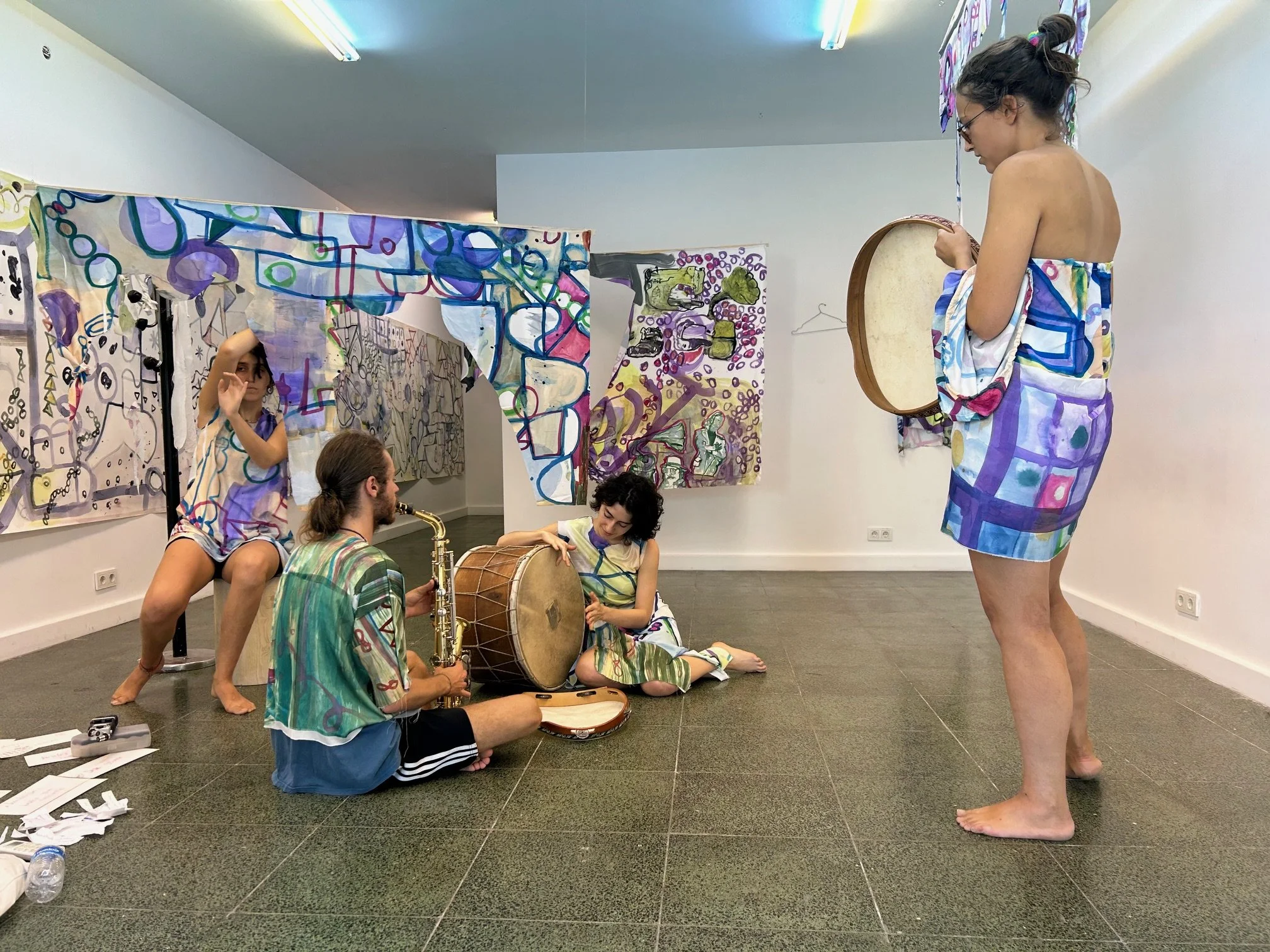
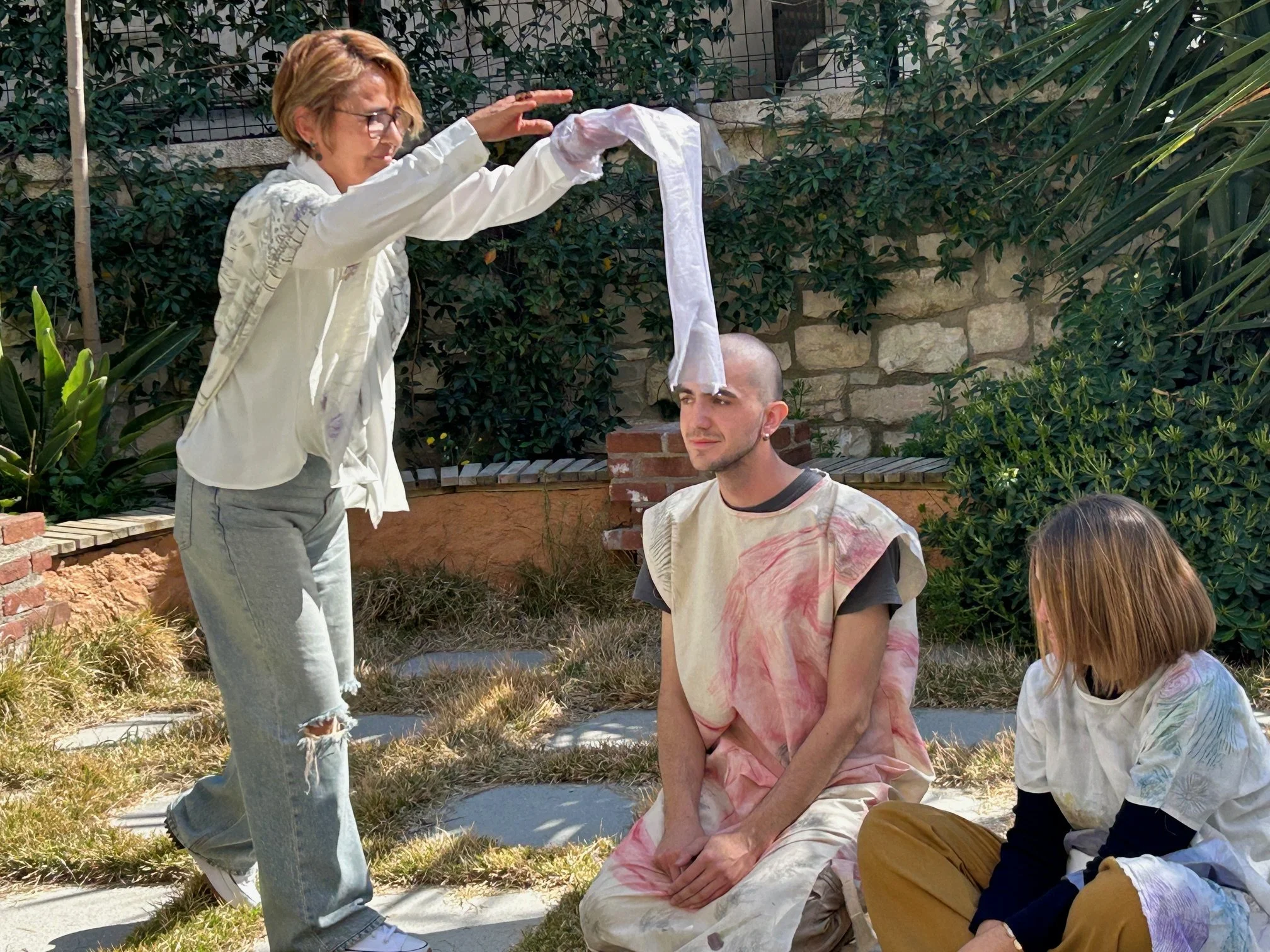
A project made at 5533 (IMC 5533), where collaborators responded to an open call looking for people interested in expressing their experiences of migration, through movement. Ceyda created the patterns and clothing over a week at 5533, and the second week was spent collaboratively exploring a performance. Video interview by Onagore available at: ///
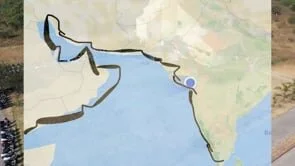
(version with sound - intermittent through the video - words in common between Hindi/Gujarati and Arabic, Farsi, and Turkish… highlighting the cultural exchanges and similarities throughout the area- spoken while walking over a sea map dug out with help from the artists students at VNSGU 2019-2020.
Title refers to a poem the artist read at the British school in Saudi Arabia as a child. The Dromedary is the camel in Arabia, and the Bactrian- of Central Asia and India.
The work is an abstract floor plan of a shared flat that I lived in, in Bermondsey, London for a period of one or two months. It is made with organic wool collected from a village in Turkey, and which I dyed with natural dyes in Turkey and Kuwait. The piece is about migration and rootlessness and creating roots. It is also about architecture and soft textiles transforming architectural spaces. There is contrast between the soft materials and the sharp architectural edges. There is also a juxtaposition of soft, migratory materials and a rooted, structural home. The weaving is the first of a series of 8 - one for each home inhabited during a migratory two year period in London. Exhibited at the Mid-Wales Art Center, 2020.
The image is of a performative work where the artist walks over the knit pieces of wool, with images of the sun flickering through. The knit pieces are found work of a Muserref E., who suffered from Alzheimers, and knit them over a period before she passed away.
the remains of ants having eaten sugarcanes. The piece came about by accident, when I had long canes of sugar in my studio- thinking I would hang them and create some kind of structural installation. Over a period of weeks, I observed ants eating the sugarcane, and leaving behind a soft sawdust like material… of various skin tones… I collected these and put them in a jar, as they reminded me of the contested Sugar trade, economic race relations and colonial histories… exhibited at the Tapi Art Festival, Surat, Gujarat, India. 2020.
Making Talisman T-shirts. Healing garments inspired by historical talismanic shirts made as protective garments for individuals. In this practice, the shirts have patterns (representing sorrows or anxieties) that are meant to wash off , and some patterns that remain (desires, wishes). The person sleeps in the shirt for two nights, then washes it, and the worries wash off. 100 % positive user reviews so far. Contact the artist for further information. See the Press tab for the Decorating Dissidence article about the work. The work was also made at the Liverpool Alternates Biennial in 2018.
A room with textiles dyed with indigo and printed with cyanotypes: face on pillow, cloud patterns on curtains, and other details. Sound recording of waves crashing.
photographs printed on oyster shells. Made on an artist residency excursion on the island, while noticing traces of war. An artist book and dissertation was written on the same theme, of "everything we do is war, and sometimes music.”
Exhibited at the Royal College of Art, 2018, and the Migration Museum in London, 2019.
Video of installation and performance produced at the Veer Narmad South Gujarat University, during the Citizenship Amendment Act (CAA) protests in India, and the ongoing labor politics between the Gulf / Middle East, and Southeast Asia. The video addresses cultural similarities between the locations, through the simple linguistic act of hearing words in common, used in daily life. installation, February 2020, video produced November 2022 by Ceyda Oskay, edited by Sinan Guldal.
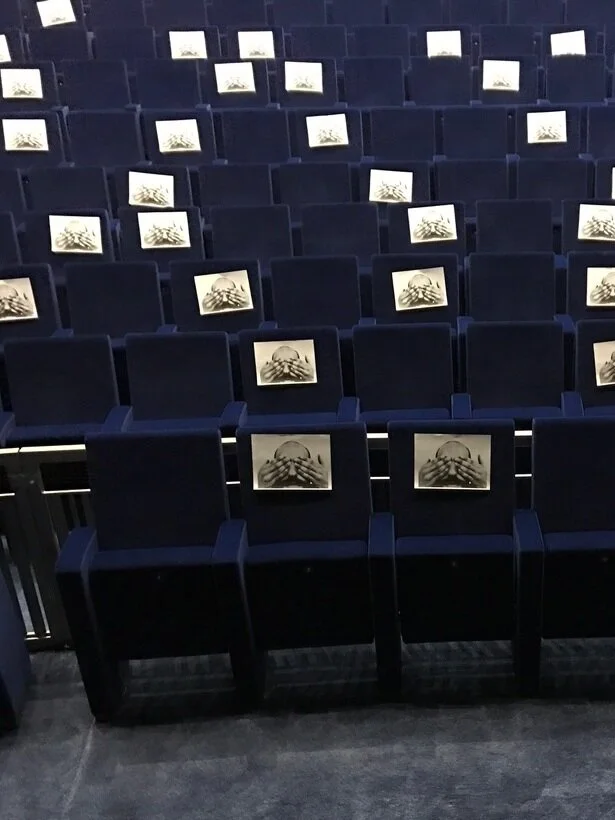
The work is about: denial, ignoring, protest, power.
The work is documented from the side of the person/action being ignored. However, the meaning of the work is both ways: it can also be the other way around where the viewer sits with the audience and participates in the ignoring.
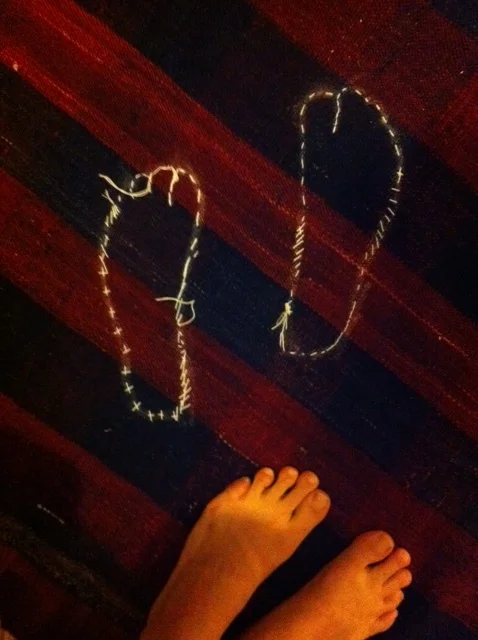
Still of a performance of dancing feet on a nomadic carpet that I embroidered feet traces onto. The carpet is nomadic, and I embroidered feet traces onto it- as a meditation on staying rather than moving as a nomad.
A collaborative piece where I make ink from soot collected from shops in Tarlabasi, Istanbul; and then paint with children on the street. Thinking about histories, material, text, documentation, migration. Project supported by Pasaj Istanbul.
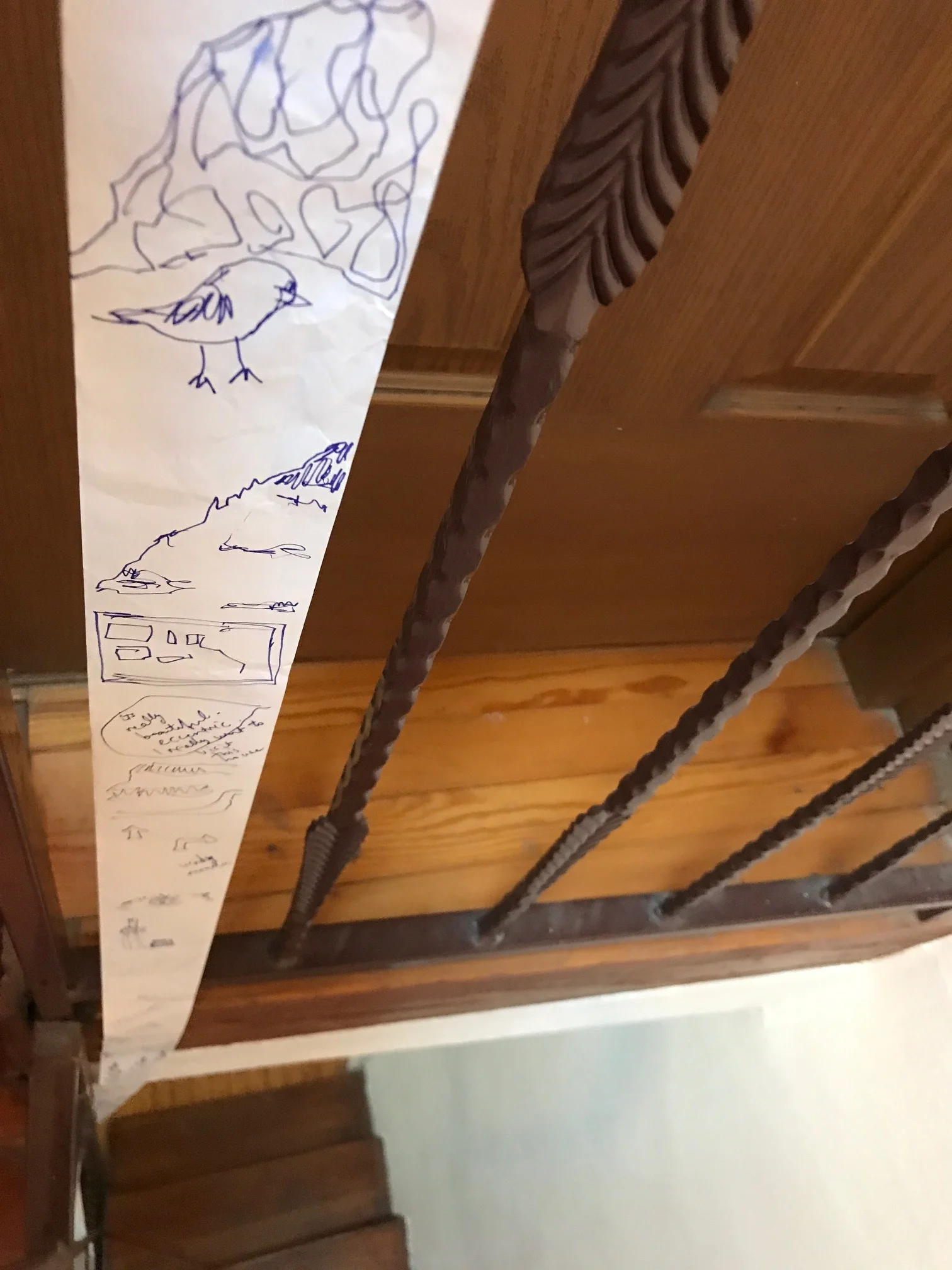
These sketches were made in a moving car during a road trip in Iceland. The sketches are quick and abstract - trying to capture a fleeting landscape as the car moves. The work is displayed on a winding staircase so that you can ‘read’ the images as you walk up and down the staircase.
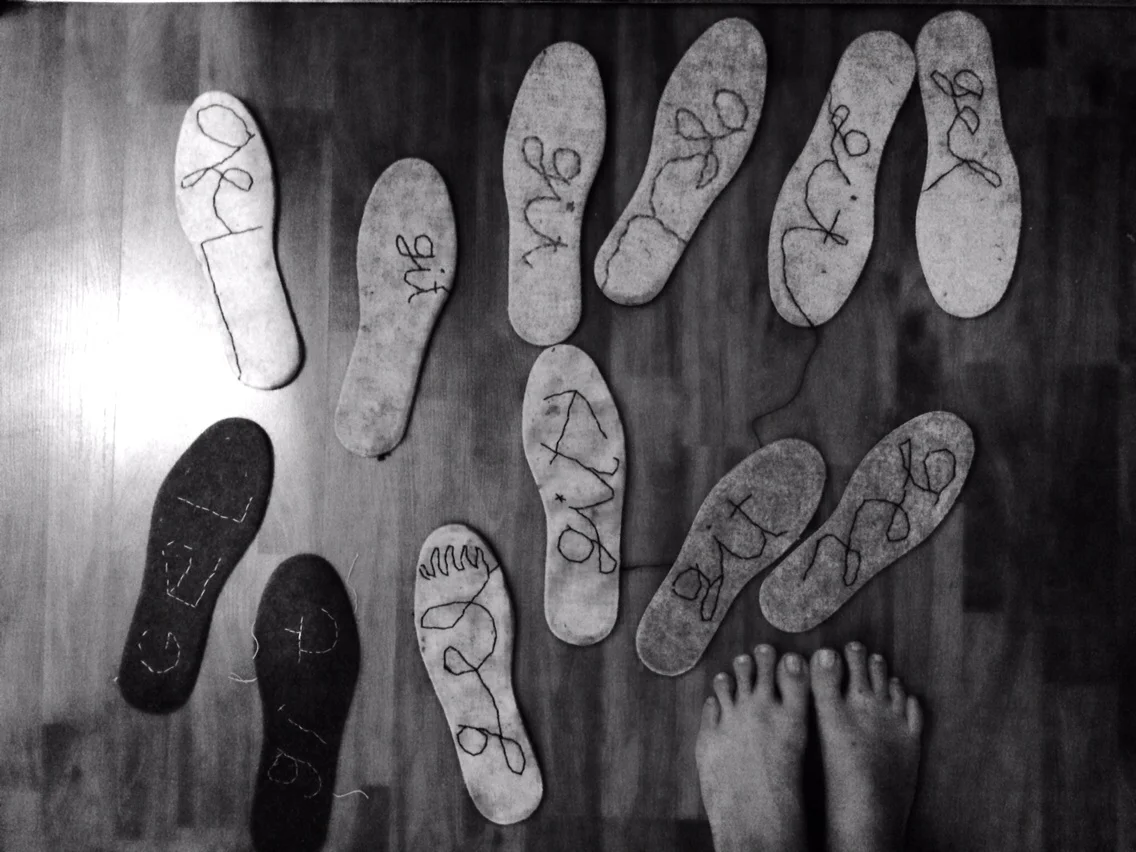
A play on the words “git-gel”in Turkish which mean: Git: to go, gel: to come; and together have a dual meaning of the tides at sea, as well as feeling ambivalent about something.
One of many artists books by the artist. Ï would do it if I were the main character of the book”
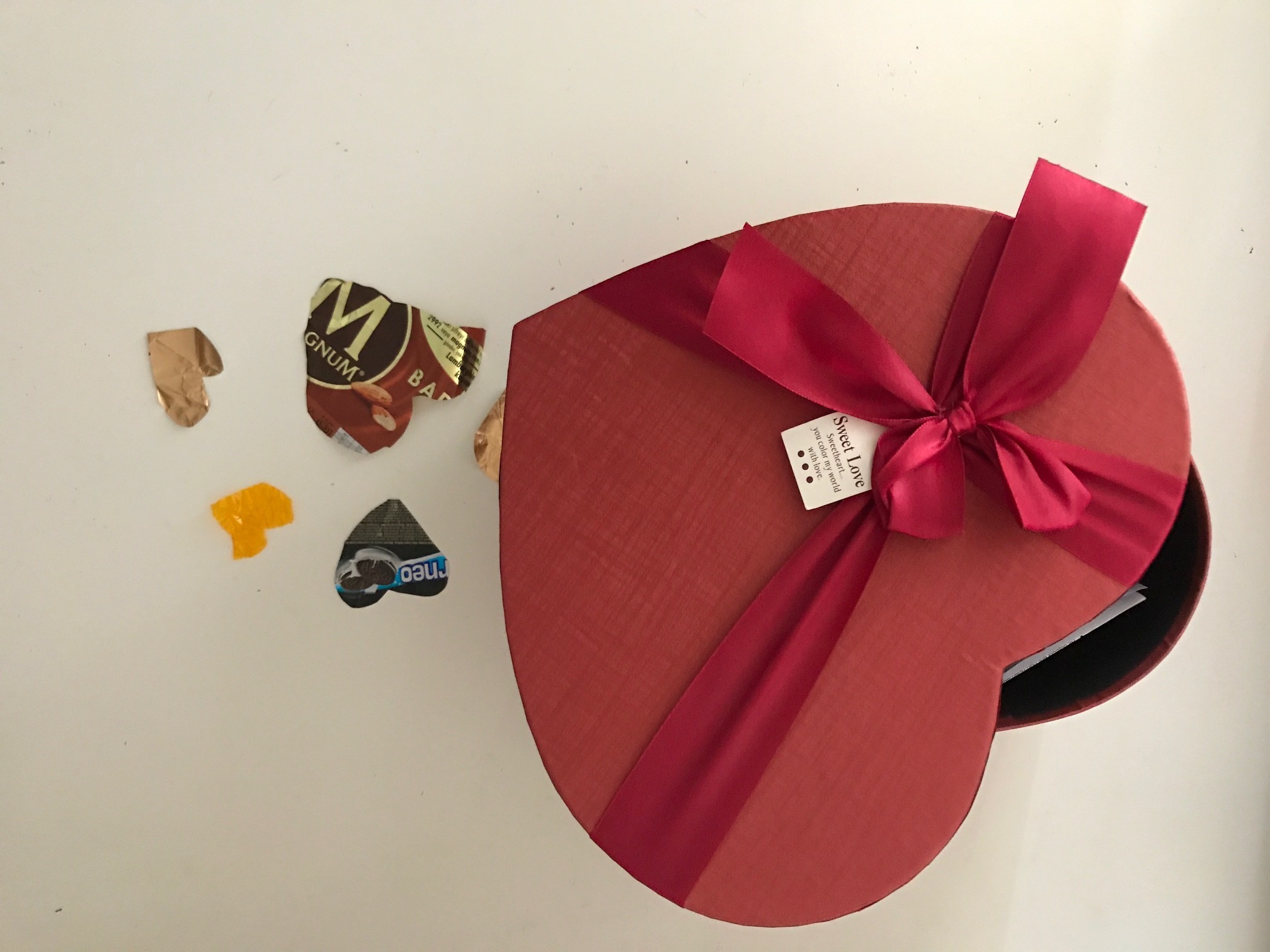
wrappers of candy and chocolate - cut out as hearts, eaten after a breakup. Currently at the museum of broken relationships in Zagreb, Croatia.
This was a loaf of bread with pieces of my diary torn up and baked in it.
It is about the daily obsession with diary-writing, that actually takes time from living life itself - and whether to reflect, or to live - and how to do both in balance (ref. Nausea, Jean Paul Sartre).
It was presented to an art class where one student ate all of his piece, another picked out the paper and tried to read every word, one compared it to a church ritual, and another asked about the ingredients as she has food limitations, and another also found the male professor's request that I bake fresh bread everyday to the class - to be sexist.
An imaginary walk in the forest of the printed artwork. Feet traces.
Frottages of a broken clarinet, also published by SNOW Lit Review Magazine No 10, edited by Anthony Barnett. Same issue as with Joan Jonas. http://abar.net/snow.pdf
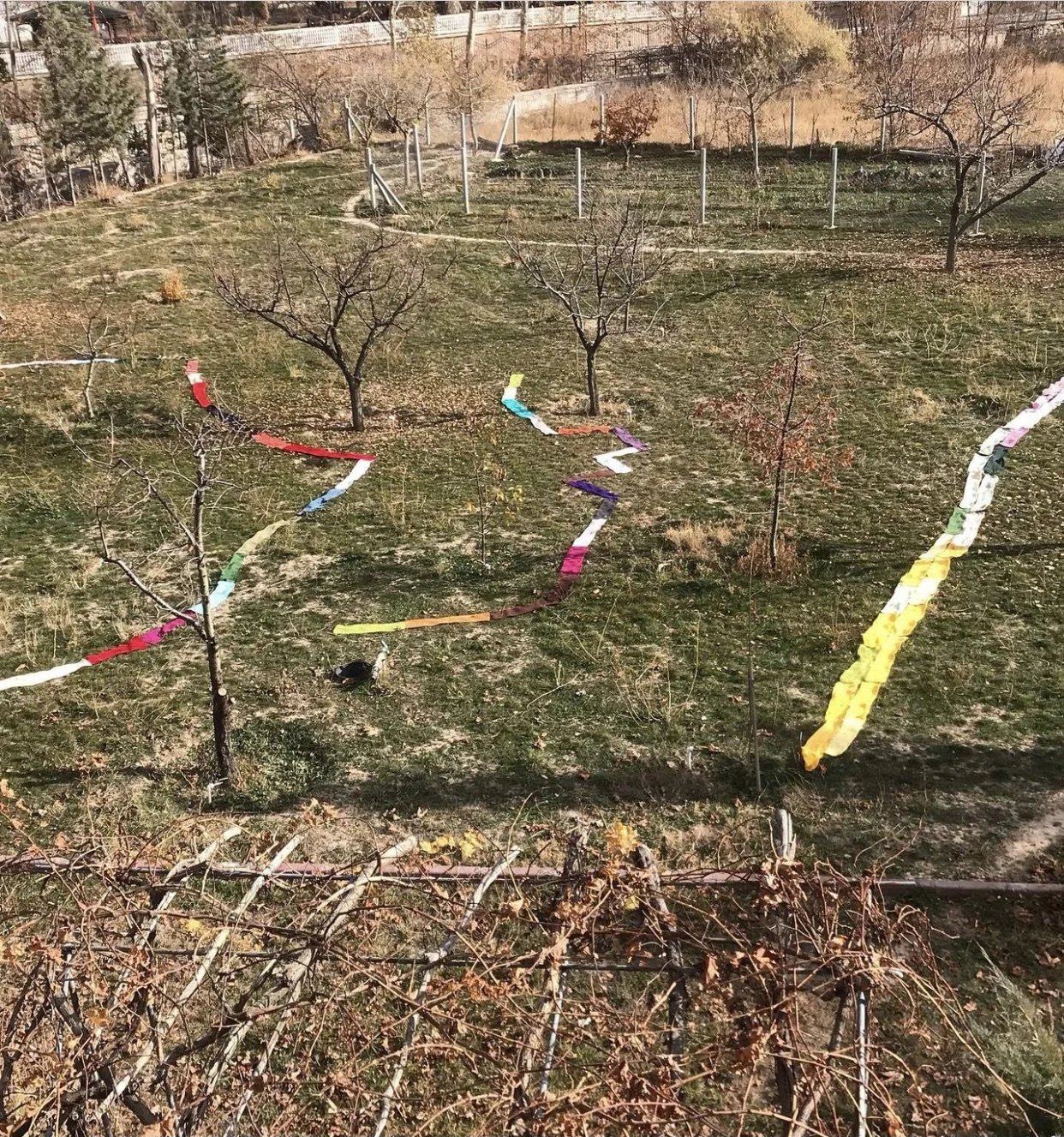
These performances came out of a two day workshop at the Tohum Art Initiative in Urla, Izmir, Turkey. Participants were asked to add frottages documenting their day - onto existing clothing items with some prints made by the artist already. They were then given a series of prompts that created a series of performances, documented through a video- to be linked.
Photos of pink cotton candy in Surat, Gujarat, India. The bright print is in contrast with the background.
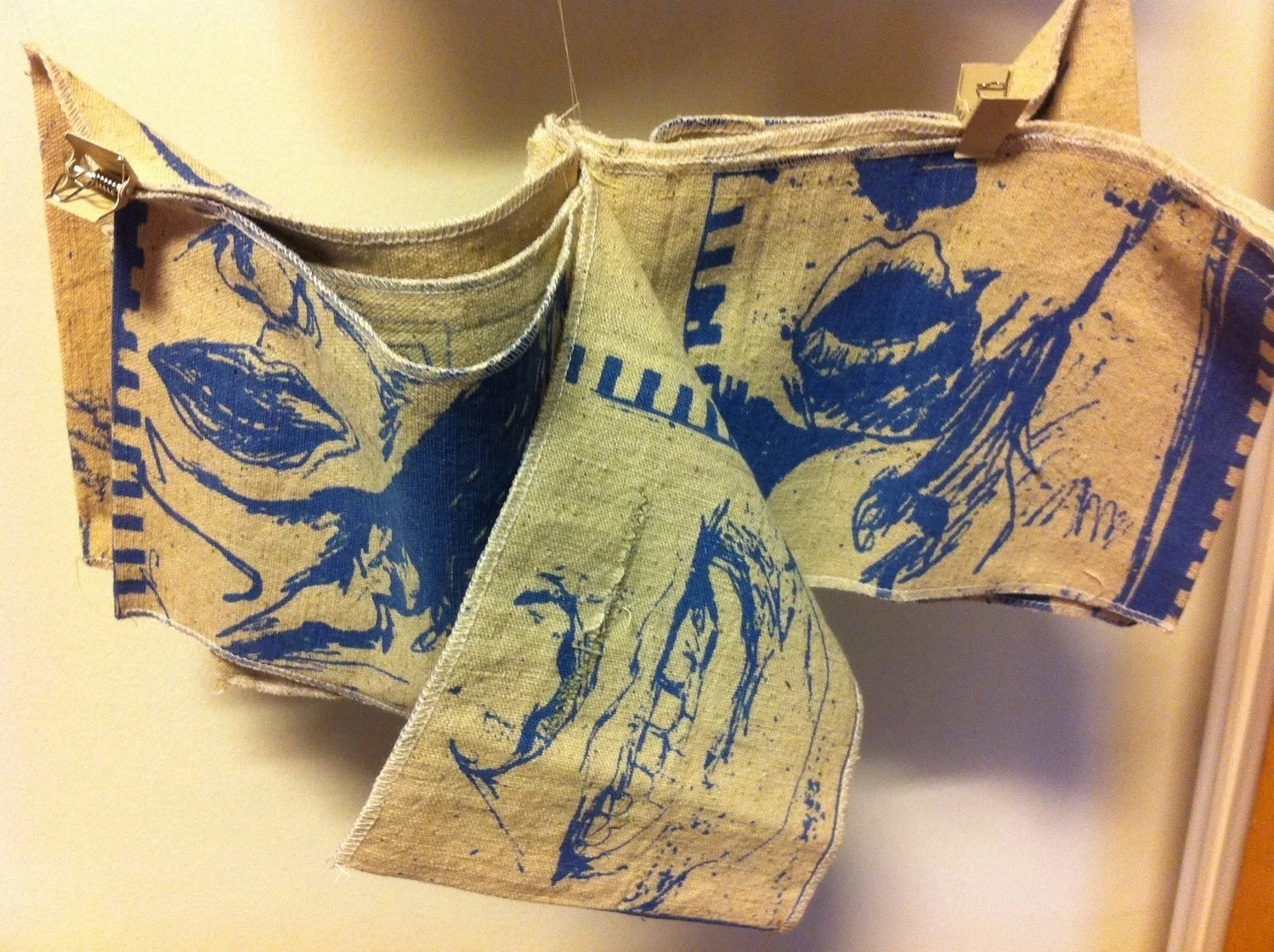
A book made out of self-portraits focusing on expressions of the mouth- as if someone were talking. A book without written words.